Earlier this month, we released the 2026 High Growth Study Executive Summary. We’ve already previewed some insights from the study that show AI’s growing influence on the marketplace. In this issue, however, I want to explore a different trend that we noticed as we dig into the data.
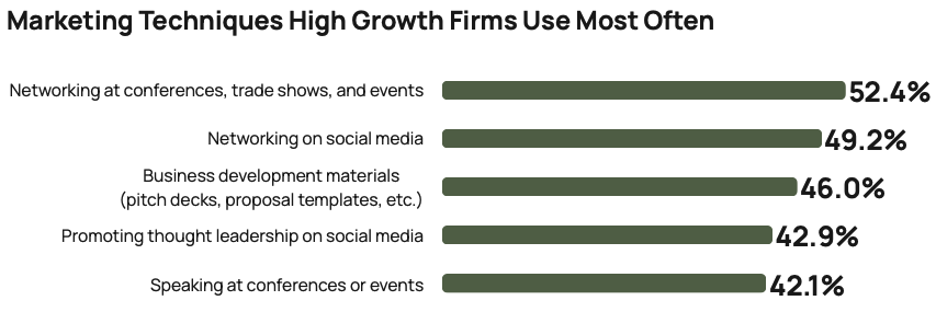
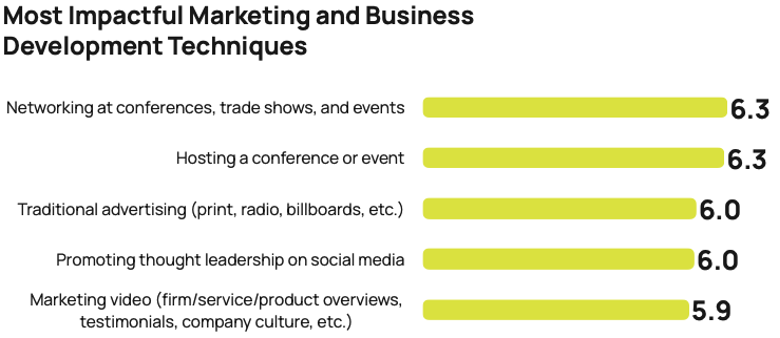
Below are two charts. Both represent high-growth firms, the elite segment of study participants that grew at a compound rate of 20% or more for the past three years. The first chart shows the five marketing techniques that high-growth firms use most often. The second shows the five techniques that deliver the greatest impact (on a 0–10 scale, where 10 is the highest level of impact).
Traditional Marketing Makes a Comeback
If one theme emerges from this data, it is the dominance of traditional marketing techniques. For instance, in-person networking has made a huge comeback since the pandemic. In last year’s study, 45.6% of respondents identified in-person networking as a technique they use. That put it in a tie for third place. This year it has jumped to the front, listed by 52.4% of respondents. That’s a 15% year-over-year increase.
Let’s put this number in perspective. The year before the pandemic (2019), networking at live events was listed by 56.5% of survey participants—the most-used marketing technique that year. Today, adoption of this technique is approaching pre-Covid levels.
But we noticed other things as well. For instance, networking at events is not only the most common technique used by the top-performing organizations, it’s also tied for the most effective.
When we asked which techniques produced the greatest impact, hosting a conference or event tied for the lead, the first time this tactic has made the top-five—or even top-ten—list. Apparently, events are not only popular, they are generating leads and business opportunities for today’s most successful firms.
We also observed that of the five most effective marketing techniques high-growth firms use, only two are digital (promoting thought leadership on social media and marketing video). But what really caught our eye was the middle item on the list. For a variety of reasons, traditional (non-digital) advertising isn’t used much these days—it’s not even in the top 25 techniques—but when it is used, it apparently works very well. It’s in a tie for second place on the impact rating list. We didn’t see that coming!
How the Pandemic Changed Professional Services Marketing
You remember it well. The pandemic forced almost every firm to embrace digital marketing tools and techniques. And typically, once an organization gets used to a new way of doing things, they stick with it. At the same time, the way relationships were developed and services were delivered changed. Even today, many relationships that were once handled in person are now done remotely.
What’s Happening Today
So why this snap-back to traditional techniques?
Likely, this trend is propelled by at least two forces:
- A strong desire to build relationships face-to-face again. With the specter of the pandemic behind us, firms crave a return to “normalcy.”
- Digital marketing is in a period of radical transformation. Traditional SEO is stumbling, website traffic is in steady decline and the rise of AI produced a basket full of partially baked new products. Marketers are either cautiously testing these products or waiting for something they can trust to emerge.
But this is not the whole story.
Digital Marketing Is Alive and Well
Digital marketing may be a-changing, but it is no less critical. When we look deeper into the data, we see that high-growth firms are still using a balanced mix of traditional and digital techniques in their marketing programs. For instance, social media, search optimization (SEO & GEO), online advertising and email marketing are prominent features of many firms’ strategies.
Without this digital marketing backbone, these firms’ face-to-face opportunities would be considerably limited. Digital provides the reach and brand awareness that make interpersonal relationships easier to cultivate and new business faster to close.
What Do You Do with this Information?
So should you be doing more in-person and online networking and fewer webinars? Not so fast. Every firm, client base and industry is different. So what works for a typical high-growth firm may not be right for you. But if you are aware of what these top-performers are doing, you will have a deeper understanding of the marketplace, so you can make better decisions.
Download the 2026 High Growth Study (it’s free!) and explore the data and advice, especially what high-growth firms are doing. Then compare what they do to your own program. You are likely to come away with at least a few exciting ideas or initiatives for the coming year.