
Free Checklist
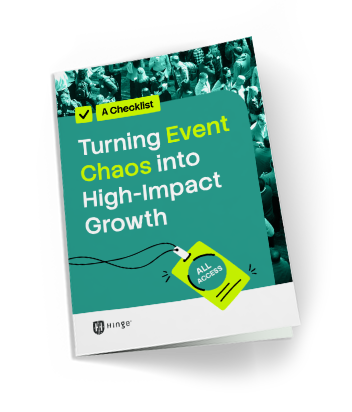
Turning Event Chaos into High-Impact Growth
This checklist provides professional services firms with a systematic, four-phase blueprint to eliminate last-minute planning confusion, align subject matter experts, and transform high-cost event investments into predictable business development engines.
Relevant industry conferences and high-profile events represent one of your firm’s greatest opportunities for high-impact lead generation and brand authority.
In fact, Hinge’s annual High Growth Study has shown for over a decade that sponsoring, networking, and speaking at events rank among the most frequently used marketing techniques in the professional services marketplace.
Yet, for too many firms, event investments end up as a staggering drain on time, money, and emotional energy. Planning at the last minute and making ad-hoc decisions on the fly is an incredibly expensive mistake. When you factor in the hard costs of premium sponsorship packages, booth displays, travel, and lodging—plus the massive opportunity cost of sending highly billable leaders out of the office—the “cost of chaos” rapidly adds up.
To remain competitive and drive real business development, you must move away from an informal, reactive approach. You need an intentional, repeatable, and scalable model.
This is why we created this comprehensive event strategy checklist that you can use as your definitive, step-by-step playbook to take command and execute a well-planned event strategy. By operationalizing your process, you will reduce your dependency on any single person, eliminate last-minute confusion, align your subject matter experts with your overarching growth strategy, and dramatically improve your team’s on-site business development performance.
Download the full guide by filling out the form on this page!
What’s Inside the Playbook? A Four-Phase Blueprint
The event strategy checklist provides actionable, step-by-step checklists broken into four distinct, manageable phases to guide your firm’s next major event investment:
1. Strategic Planning and Event Logistics
Stop guessing which events matter. This phase gives you the framework to align your event selection with actual client data, clarify team roles based on technical expertise, and establish crucial CRM tracking from day one to measure registration and ROI accurately.
2. Multi-Channel Event Promotion and Outreach
Don’t rely solely on foot traffic. Learn how to deploy synchronized campaigns across email, landing pages, and social media well before the event kicks off. This section helps you equip your staff with social media training and execute direct outreach to lock in critical 1:1 meetings with high-priority targets.
3. On-Site Engagement and Digital Amplification
Maximize your physical and digital footprint simultaneously. Discover strategies for real-time digital amplification, booth etiquette that keeps prospects from feeling excluded, and disciplined opportunity tracking so that no high-value connection is lost in the post-event rush.
4. Post-Event Lead Nurturing and ROI Analysis
Turn event momentum into predictable revenue. The final phase details how to properly ingest lead data into your CRM, enroll prospects into structured marketing sequences, conduct formal team debriefs, and reconcile final metrics to answer the ultimate question: Should you return next year?
Key Takeaways You’ll Gain
- Shift from Ad-Hoc to Scalable: Learn to eliminate the cost of chaos by replacing last-minute scrambles with a repeatable, systematic process that any team member can execute.
- Maximize Expert Visibility: Discover how to get internal stakeholders and subject matter experts to buy into a unified plan, positioning their expertise to build the firm’s brand.
- Unify Digital and Physical Marketing: See how pre-event promotion, on-site networking, and post-event email nurturing work together to amplify your presence.
- Protect and Convert Data: Establish rigorous data discipline so valuable conversations turn into tracked pipeline opportunities before your team even returns to the office.
Frequently Asked Event Strategy Questions
How do we accurately calculate the true ROI of a professional services event?
To calculate true ROI, you must track both hard and soft costs against the long-term pipeline generated. Hard costs include sponsorships, booth production, travel, and lodging. Soft costs include the billable hours lost by attending experts. By integrating the event into your CRM immediately (as outlined in Phase 1), you can monitor influenced pipeline and closed-won revenue over the subsequent 6–12 months.
How far in advance should we begin planning for a major industry conference?
For major industry events where you are sponsoring or speaking, strategic planning and long-lead coordination should begin 6 to 9 months in advance. This ensures access to optimal booth placement, early-bird marketing opportunities, and preferred travel logistics. Multi-channel promotion and direct prospect outreach should intensify 4 to 6 weeks prior to the event dates.
How can we better engage our subject-matter experts in our event strategy?
Professional services experts are often uncomfortable with traditional sales tactics. Instead, shift their focus to teaching and sharing insight. Frame their role as positioning their expertise and building relationships through thought leadership. Equipping them with a clear plan, pre-scheduled 1:1 meetings, and specific talking points allows them to engage naturally and comfortably without feeling like salespeople.
What is the most common mistake firms make in post-event follow-up?
The most common mistake is a lack of speed and personalization, allowing high-value interactions to be lost in the post-event rush. High-growth firms aim to ingest data into their CRM and deploy personalized, value-driven follow-ups (such as sharing executive guides or relevant research articles rather than a generic sales pitch) within 48 hours of the event’s conclusion.
Access the Complete Playbook
Ready to eliminate the fire drills and build a smarter, more predictable roadmap for your firm’s growth? Fill out the form on this page to get the full checklist.